
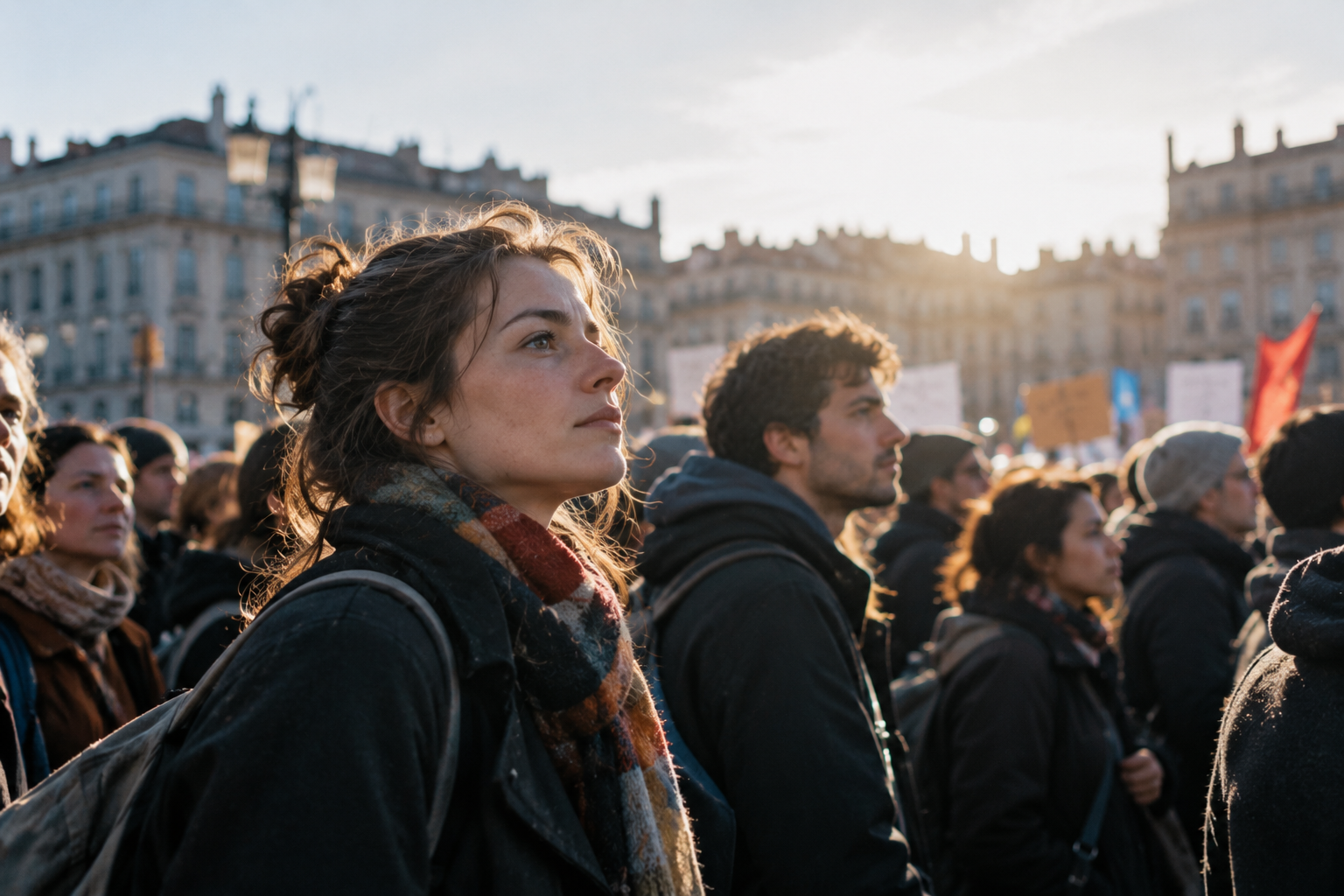
Trust is one of those things societies tend to notice only after it begins to disappear. When people trust their neighbours, institutions, employers, schools and public services, everyday life usually requires less friction. People cooperate more easily, accept common rules and feel that participation is worthwhile.
When trust weakens, the consequences are harder to contain. Economic insecurity can become resentment, political disagreement can turn into hostility, and social differences can become deeper divisions. The problem is not simply that people disagree with one another. It is that they become less confident that cooperation will produce fair results.
The United Nations has described this combination of insecurity, inequality, declining trust and social fragmentation as a major global social challenge. Its World Social Report 2025 found that more than half of the world’s population had little or no trust in their government, while trust levels were declining from one generation to the next.
The figures point to a much larger question: what holds a society together when confidence in its institutions begins to weaken?
Trust Is the Invisible Infrastructure of Everyday Life
Modern societies depend on millions of interactions between people who do not know one another personally. A patient expects a healthcare system to function, a customer trusts that a payment will be processed, an employee expects a contract to be honoured and a citizen assumes that public rules will be applied consistently.
Most of these interactions work because people do not have to verify everything themselves.
Trust reduces the amount of uncertainty surrounding ordinary decisions. It allows people to cooperate with strangers, participate in institutions and make plans for the future. Without it, even relatively simple activities become more complicated because every interaction carries an additional question: can the other side be relied upon?
This is why trust is closely connected to social cohesion. The UN defines social cohesion through ideas including cooperation, solidarity, fairness, inclusion, belonging and trust. When these relationships weaken, collective action becomes more difficult.
Trust, therefore, is not simply a matter of personal optimism. It is part of the infrastructure that allows societies to function.
Economic Insecurity Can Change How People See Society
People do not form their opinions about society in isolation from their economic circumstances.
A person who can find stable employment, afford basic needs and make reasonable plans for the future is likely to experience institutions differently from someone who constantly worries about losing income or falling into poverty. Economic insecurity changes the way people interpret risk, opportunity and fairness.
The World Social Report 2025 found that more than 2.8 billion people were living on between $2.15 and $6.85 a day, leaving many vulnerable to falling back into extreme poverty after relatively small setbacks. The report also found widespread concern about employment security.
These pressures can have social consequences well beyond household finances. When people believe that economic progress is inaccessible or that the rules favour only those who are already successful, frustration can become distrust.
The connection works in both directions. Economic insecurity can weaken social cohesion, while low trust can make it harder for societies to agree on the policies needed to address insecurity. The result can be a cycle in which dissatisfaction reinforces itself.
Inequality Is About More Than Income
Social inequality is often measured through income, wealth or access to material resources. Those indicators matter, but inequality also affects people’s perception of whether society is fair.
Two people may live in the same city and have access to the same formal institutions while experiencing completely different opportunities. Education, family background, geography, social connections and discrimination can influence where people begin and how far they can progress.
The UN’s 2025 social report found that around 65 per cent of the world’s population lived in countries where income inequality was growing. It also emphasized that a significant share of inequality is connected to characteristics such as family background, place of birth and other circumstances people do not choose for themselves.
This matters because trust depends partly on perceived fairness. People are more likely to accept differences in outcomes when they believe that the system offers a meaningful opportunity to participate and advance.
A society does not need identical outcomes to maintain cohesion. It does, however, need credible pathways through which people can believe that effort, participation and cooperation can lead somewhere.
The Digital World Has Changed the Trust Problem
Technology has transformed how people encounter information, institutions and one another. It has also changed the speed at which trust can be created, challenged or destroyed.
A rumour that once moved through a small social network can now reach millions of people within hours. False information can imitate the appearance of professional journalism, official communication or personal testimony. At the same time, recommendation systems can repeatedly expose users to material that confirms what they already believe.
The problem is not technology itself. Digital platforms can strengthen communities, expand access to information and connect people who would otherwise remain isolated. The United Nations has also highlighted the ability of digital technologies to expand access to services, connectivity and economic participation.
But the benefits are not automatic. The same technologies can deepen existing inequalities, threaten privacy, spread disinformation and weaken confidence in shared sources of information.
This creates a new challenge for society: people need not only access to digital technology, but also the ability to judge information, recognize manipulation and participate safely in digital spaces.
Younger Generations Are Inheriting a Different Social Contract
Trust is also shaped by the conditions in which people grow up.
Every generation encounters a different economic, technological and political environment. Expectations about work, housing, education, relationships and government are influenced by those experiences. If younger people repeatedly encounter insecurity or feel that established institutions do not reflect their realities, their relationship with those institutions can change.
Recent UN research has placed particular attention on young people’s well-being, linking mental health and social outcomes to wider conditions including poverty, inequality, access to education and decent work, digital environments and social exclusion.
This is important because social trust is not simply inherited. It is learned through experience.
A young person who sees institutions delivering useful services, responding to criticism and providing genuine opportunities receives a different message from one who repeatedly encounters barriers or exclusion. Over time, those experiences influence whether institutions are regarded as legitimate and worth supporting.
That makes trust a generational issue as much as a political one.
Local Relationships Still Matter
National institutions receive much of the attention when trust is discussed, but social cohesion is also built at a much smaller scale.
People experience society through workplaces, schools, neighbourhoods, community organizations, public spaces and everyday interactions. These environments provide opportunities to cooperate with people outside one’s immediate circle.
A local project, sports club, volunteer organization or community initiative may appear insignificant compared with national politics, yet these settings can create something larger: repeated contact between people who might otherwise remain strangers.
Such relationships do not eliminate disagreement. Their value is that they create experience of cooperation.
Someone who has worked alongside people with different backgrounds, interests or political opinions may be less likely to see social difference as an automatic threat. Familiarity can make disagreement more manageable because people have already learned that cooperation remains possible.
In this sense, social cohesion is built not only through major political decisions but through thousands of ordinary encounters.
Institutions Cannot Rebuild Trust With Communication Alone
When public confidence falls, institutions often respond with more information, stronger messaging and new communication campaigns. These measures can help, but communication cannot compensate indefinitely for poor performance.
Trust is influenced by whether institutions deliver what people expect. Public services that are accessible, fair and reliable create a different relationship with citizens from services that are difficult to reach or perceived as arbitrary.
A December 2025 UN DESA policy brief on the erosion of trust made this connection explicit, noting that people are more likely to trust institutions when they perceive them as legitimate, fair and effective. It also linked institutional trust to the ability of societies to cooperate and maintain social cohesion.
This suggests that rebuilding trust is ultimately less about persuading people to believe institutions and more about giving them reasons to believe.
Consistency matters. Transparency matters. Accountability matters. So does the experience of being treated with dignity when interacting with an institution.
A More Connected Society Is Not Necessarily a More Cohesive One
Modern societies are more connected than previous generations could have imagined. People can communicate instantly across continents, follow events in real time and maintain relationships despite enormous physical distances.
Yet connectivity and cohesion are not the same thing.
A person can be surrounded by digital communication and still feel socially isolated. A community can have constant access to information while becoming increasingly divided over what information is credible. A country can have extensive communication networks while experiencing declining confidence in its institutions.
The challenge is therefore not simply to connect more people. It is to create conditions in which connection produces cooperation rather than permanent conflict.
That requires a broader understanding of social progress. Economic growth remains important, but societies also need security, inclusion, reliable institutions and spaces where people can develop relationships across differences.
Rebuilding Trust Is a Long-Term Social Project
There is no single policy capable of restoring trust once it has been weakened. Trust develops gradually through repeated experience, which means rebuilding it also takes time.
The direction, however, is becoming clearer. The UN’s recent social development work has placed equity, economic security and solidarity at the centre of efforts to strengthen social cohesion. In 2026, the UN has continued to emphasize social inclusion, decent work, social protection and coordinated responses to inequality as central elements of social justice.
These ideas point toward a broader definition of what makes a society strong.
A resilient society is not one in which everyone thinks alike. It is one in which disagreement can exist without destroying the possibility of cooperation. It is a society where people can challenge institutions without believing that institutions themselves are meaningless, and where social differences do not automatically become permanent divisions.
Trust grows when people repeatedly see that cooperation works, that rules are applied fairly and that their participation matters.
In the end, that may be the most important measure of social strength. A society holds together not because conflict disappears, but because enough people continue to believe that working together is still worth it.