
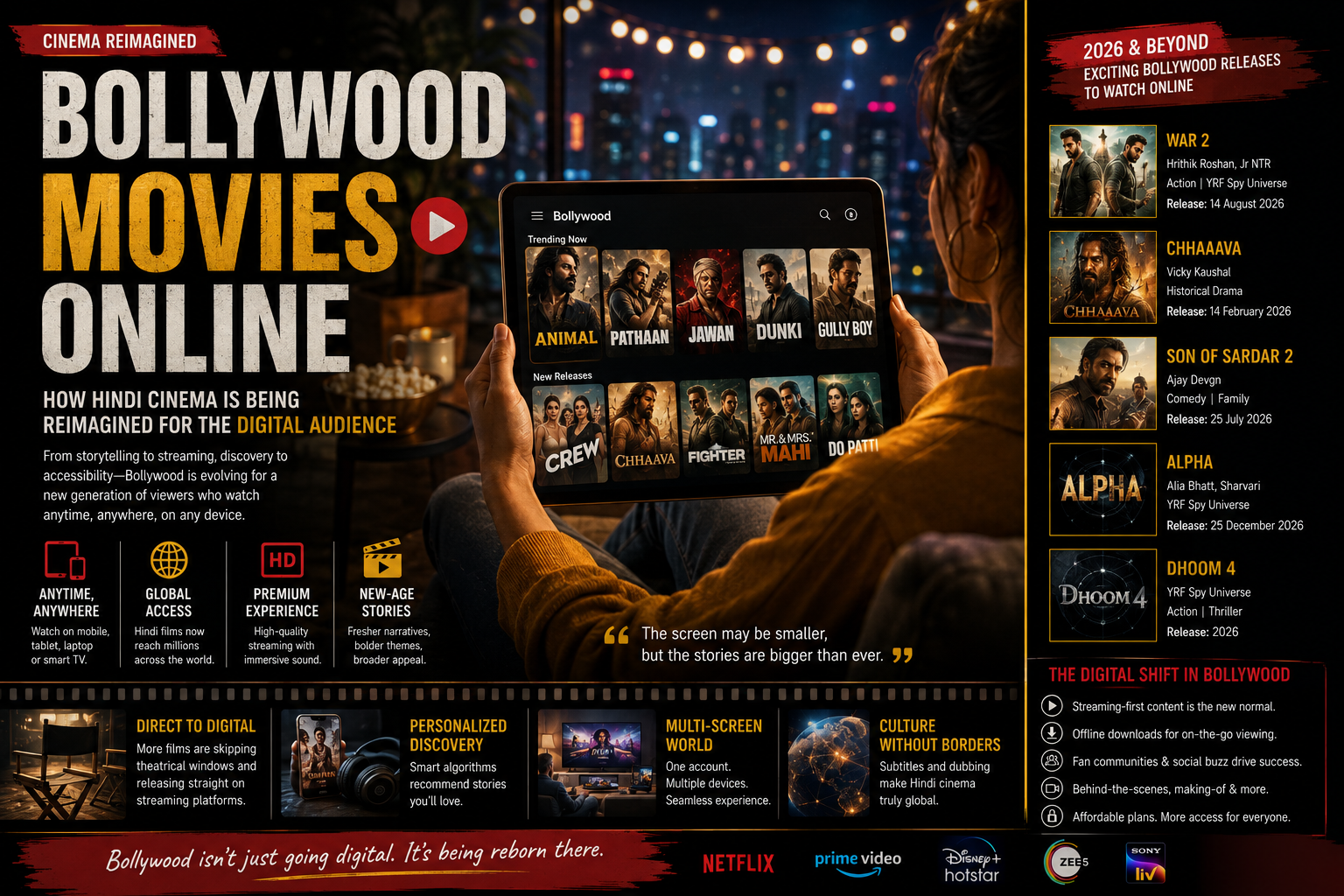
Watching films has become more than a leisure activity scheduled around television broadcasts or cinema visits. Digital platforms now fit into everyday routines, from unwinding after work to sharing stories across cultures. Yet the abundance of available content has created a paradox: finding something worth watching can be more exhausting than watching the film itself.
After a demanding day, choosing a film can seem like the simplest way to switch off. A quick search for Bollywood movies online opens the door to Hindi-language romances, action films, family dramas and comedies, alongside entertainment from other film industries. The technology makes access straightforward, but the experience also reflects a wider change in how people organise their free time, manage attention and connect with stories beyond their immediate cultural surroundings.
Online cinema has become part of the ordinary rhythm of modern life. A film might accompany a quiet evening at home, provide a shared activity for friends or family, or offer a temporary escape from work-related pressure. What appears to be a simple entertainment choice is also connected to larger questions about digital habits, psychological recovery and the role of culture in an increasingly connected society.
When Choosing a Film Becomes Harder Than Watching It
The expansion of digital entertainment has created an unexpected problem. Viewers have access to more titles than ever, yet the process of selecting one can consume a surprising amount of their limited free time.
This experience is closely related to the psychological concept known as the paradox of choice. When people face too many alternatives, making a decision can become more demanding rather than more satisfying. Every additional option creates another possibility to evaluate, while the knowledge that a better choice might exist can make it harder to settle on the one already available.
The effect becomes particularly noticeable after a long day. Someone looking for a relaxing evening may scroll through recommendations, compare titles, watch trailers and read descriptions without actually starting a film. The activity intended to provide rest begins to require the very attention the viewer hoped to recover.
Digital entertainment does not create this psychological tendency, but large online catalogues can amplify it. The problem is not necessarily that viewers lack good options. It is that they may have difficulty narrowing those options to a manageable selection.
How Better Discovery Can Reduce Digital Fatigue
The solution is not to remove variety, but to make it easier to navigate. Clear genre categories, useful descriptions and intuitive browsing can help viewers move from an open-ended search towards a more confident decision.
A person who wants a lighthearted evening can begin with comedy rather than scan an entire catalogue. Someone interested in suspense can focus on thrillers, while viewers looking for emotionally engaging stories can explore dramas and romances. These simple starting points reduce the number of decisions required before the entertainment begins.
Moviewala’s English-language platform provides a route into different categories of film and series, including Bollywood and Hollywood productions, South Indian cinema, Bangla films and Korean dramas. Such breadth can support exploration, while category-based browsing gives viewers a way to narrow their search.
The distinction is important. A useful platform should not simply present more content; it should help people find content that suits their interests and available time. The best discovery experience makes choice feel inviting again instead of turning leisure into another task.
Streaming Becomes Part of Everyday Life
The growth of online viewing has changed not only where people watch films, but also how entertainment fits into their daily routines. Traditional broadcasting organised viewing around fixed schedules. Digital access allows audiences to organise it around their own lives.
A viewer might watch a feature film after dinner, follow an episode of a drama during a quiet weekend or return to a series over several evenings. Others may reserve films for social occasions, using a shared viewing experience to spend time with friends or family without needing an elaborate plan.
This flexibility reflects a broader transformation in leisure. Work, communication, shopping and entertainment increasingly coexist on the same connected devices. The smartphone that carries messages and work notifications can also provide access to a film catalogue. A laptop used throughout the day can become a personal cinema in the evening.
That convenience has consequences for how people experience downtime. Entertainment can be fitted around irregular schedules, but the constant availability of digital content can also blur the boundary between deliberate relaxation and passive scrolling. Opening a platform with the intention of watching one film may lead to an extended period of browsing, particularly when recommendations continually introduce new possibilities.
A healthier relationship with online entertainment does not require rejecting digital platforms. It can begin with treating viewing as an intentional activity: deciding what kind of experience would feel restorative, selecting a title and allowing time to enjoy it without repeatedly searching for alternatives.
Bollywood and the Multicultural Experience of Cinema
Digital distribution has made it easier to encounter stories from film industries that may once have seemed distant or unfamiliar. Bollywood occupies an important place in this broader cultural exchange because Hindi cinema combines recognisable genres with distinctive approaches to music, performance, romance and family storytelling.
For international viewers, a Bollywood film can offer both familiarity and novelty. Its central themes may involve ambition, friendship, love or generational conflict, while its musical sequences, dramatic rhythms and cultural references introduce a different storytelling tradition.
The same process occurs when audiences explore Hollywood thrillers, Korean dramas or films from other parts of the world. A person who begins with a familiar genre can gradually discover new performance styles, narrative conventions and perspectives on everyday life.
This is one of the most significant cultural possibilities created by online entertainment. Digital catalogues can place different cinematic traditions within the same browsing environment, allowing viewers to move between them without treating cultural discovery as a separate activity requiring extensive preparation.
Accessibility Does Not Mean Cultural Uniformity
The growing availability of international cinema does not mean that all film industries are becoming identical. Bollywood, Hollywood and Korean screen productions have developed through different histories, audience expectations and creative traditions. Their differences remain part of what makes cross-cultural viewing interesting.
Bollywood, for example, is often associated with films that combine music, romance, comedy and dramatic conflict. However, Hindi cinema also includes restrained dramas, crime stories, social commentary and experimental productions. Reducing the industry to a single formula overlooks the variety of its filmmakers and performers.
Korean dramas offer another set of storytelling conventions, with many productions building extended emotional arcs across episodes. Hollywood encompasses an equally broad range, from major franchise films to independent productions. These categories describe tendencies rather than strict rules, but they can help viewers understand where to begin.
When people encounter these traditions side by side, entertainment can become an informal form of cultural learning. Viewers may notice differences in family relationships, humour, social expectations or visual style. They can also recognise shared experiences that cross linguistic and geographic boundaries.
The value lies in preserving both sides of the experience: discovering what is unfamiliar while recognising what feels universal.
Why Emotional Storytelling Travels Across Cultures
Films can create a connection even when viewers do not share every cultural reference presented on screen. Strong performances, visual storytelling, music and recognisable emotional conflicts can communicate meaning beyond dialogue alone.
Bollywood’s use of music illustrates this particularly well. A song may express attraction, grief, celebration or uncertainty, giving an audience another way to understand a character’s emotional state. Even viewers unfamiliar with the language can respond to the performance, melody and visual composition.
Family dramas offer a different point of connection. Expectations surrounding parents, children, personal ambition and social responsibility vary across societies, but the tensions they produce are widely recognisable. A film can present these conflicts through a specific cultural setting without limiting its emotional relevance to that setting.
This does not eliminate the importance of context. Some jokes, traditions and social references may require additional understanding, and not every film will resonate equally with every audience. Cultural exchange works best when viewers approach unfamiliar stories with curiosity rather than expecting them to follow the conventions they already know.
Online discovery makes this process easier by reducing the distance between interest and access. A viewer can encounter an unfamiliar title, explore its genre and decide whether its premise is appealing without first becoming an expert on the film industry that produced it.
From Spectacle to Stories About Ordinary People
Bollywood’s large-scale productions have long attracted attention through elaborate choreography, dramatic settings and star performances. These elements can turn a film into a major event, but spectacle is only one dimension of Hindi cinema.
Many films build their emotional force around ordinary decisions and difficult relationships. Stories about education, professional ambition, family expectations and personal independence can reveal the pressures that shape everyday life. Their settings may be culturally specific, yet their central questions often extend beyond them.
Films such as 3 Idiots explore the conflict between individual aspirations and institutional expectations. 12th Fail centres on perseverance in the face of serious obstacles. Both demonstrate how personal stories can invite audiences to think about success, opportunity and resilience.
These films also illustrate why digital discovery benefits from more than popularity rankings. A widely recognised title may be a convenient entry point, but a viewer’s most meaningful discovery could be a less familiar drama whose subject closely matches a current interest or personal experience.
A broad catalogue becomes valuable when it supports both approaches: finding a familiar kind of entertainment and encountering a story that changes one’s perspective.
Making Online Viewing More Intentional
The abundance of available content does not have to result in endless browsing. Small changes to viewing habits can help restore a sense of control without turning leisure into a rigid routine.
One approach is to begin with a mood rather than a title. Someone who wants to relax might prefer a comedy, while a viewer seeking an absorbing evening could choose a mystery or a character-driven drama. The intention does not need to be precise; it simply provides a useful starting point.
Another approach is to balance familiar entertainment with occasional exploration. Rewatching a favourite film offers comfort and predictability. Choosing a Bollywood production, Korean drama or unfamiliar international title creates an opportunity to encounter different storytelling traditions.
It can also help to recognise that not every free moment needs to be filled with content. Digital entertainment is most rewarding when it serves the viewer’s needs rather than automatically occupying every available interval. Sometimes a film is the right choice; at other times, a shorter episode or a break from screens may feel more appropriate.
These decisions are small, but they reflect a larger principle: convenience is most useful when people remain in control of how they spend their attention.
The Future of Cinema Is Personal and Connected
Online film discovery sits at the intersection of technology, psychology and culture. It changes how people spend their evenings, how they recover from demanding routines and how they encounter stories created in different parts of the world.
The paradox of choice shows why access alone is not enough. A vast catalogue can expand cultural horizons, but it can also create fatigue when viewers struggle to navigate it. Clear organisation and purposeful browsing help turn that abundance into a more satisfying experience.
At the same time, the availability of Bollywood, Hollywood and Korean screen entertainment within the wider digital landscape creates opportunities for cultural exchange. Viewers can move between traditions, recognise shared human concerns and discover perspectives that would otherwise remain outside their regular viewing habits.
Moviewala offers one starting point for that exploration through its English-language collection of films and series. Whether the aim is to find a familiar Hindi romance, try a different genre or explore cinema from another tradition, the most valuable choice is the one that makes the time spent watching feel worthwhile.
In a world where entertainment is always within reach, the real luxury is not having an unlimited number of options. It is finding a story that fits the moment—and being able to enjoy it without spending the evening searching for something else.