
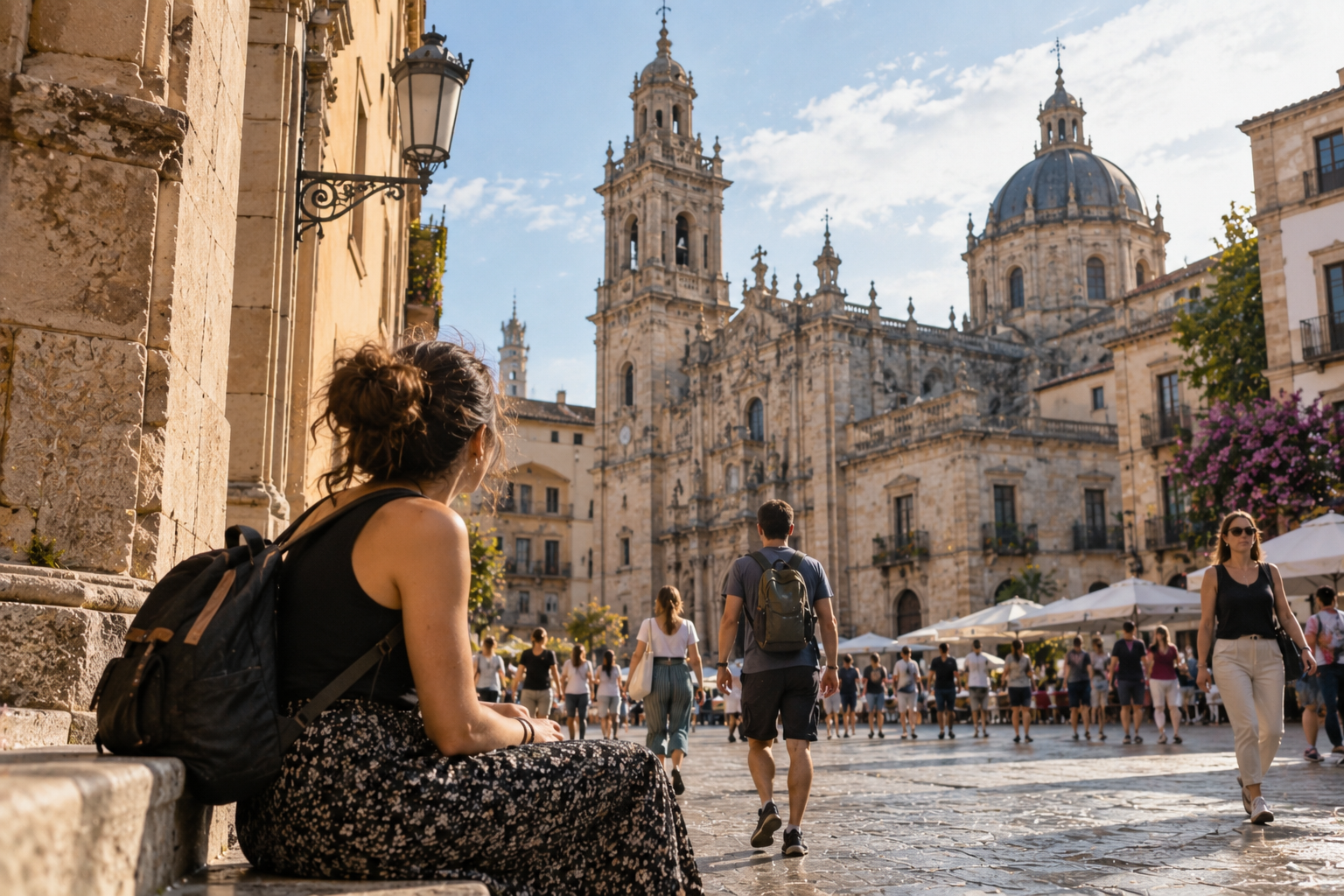
The world changes quickly. Cities expand, technologies reshape daily routines and people move between places more easily than previous generations could have imagined. In the middle of this constant movement, cultural heritage can appear to belong to another era: old buildings, archaeological sites, traditional crafts, historic landscapes, languages, music and customs inherited from people who lived very different lives.
Yet heritage remains remarkably relevant.
It is not simply a collection of objects preserved behind glass or monuments protected by law. Cultural heritage can provide communities with a sense of continuity, connect generations and influence how places develop in the present. It can also contribute to local economies, education, environmental resilience and social cohesion.
The challenge is to preserve that value without turning heritage into something frozen and disconnected from contemporary life.
Heritage Is More Than Historic Buildings
When people hear the phrase “cultural heritage”, they often think first of monuments and historic architecture. These physical places are certainly important, but heritage is much broader.
Languages, oral traditions, craftsmanship, rituals, music, food, knowledge and cultural practices can all carry memories from one generation to another. Some forms of heritage can be seen and touched; others exist primarily through people who know how to practise or transmit them.
This distinction matters because a community can lose part of its heritage even when its historic buildings remain intact. If a traditional craft disappears because there are no longer people able or willing to practise it, an important form of cultural knowledge may be lost.
Heritage therefore depends not only on conservation but also on transmission.
UNESCO’s approach to World Heritage increasingly connects cultural heritage with the life of communities and with the responsibility to transmit heritage to future generations. Its sustainable development policy recognises that heritage can contribute to social, economic and environmental objectives while remaining rooted in conservation.
Cultural Memory Gives Places Their Character
A city can be described through its population, economy, infrastructure and geography. But these measurements do not fully explain why one place feels different from another.
Historic buildings, streets, landscapes, public spaces and cultural traditions contribute to a place’s identity. They create layers of memory that make a location recognisable not only to visitors but also to the people who live there.
This becomes particularly important when cities undergo rapid development.
Modern construction can provide housing, transport and economic opportunities, but if every older structure and cultural reference disappears, a city can lose some of the features that distinguish it from countless others.
Preservation does not require stopping development. In many cases, the more productive approach is to integrate heritage into contemporary urban life. A historic building can become a cultural centre, a former industrial site can gain a new public function and an old neighbourhood can be renovated without erasing its character.
The question is not whether cities should change. They inevitably will. The question is what they choose to carry forward.
Heritage Connects Generations
One of the most important functions of heritage is its ability to create a connection between people who may never meet.
A family recipe, traditional song, local craft or historic building can contain knowledge accumulated over generations. Learning about it gives younger people access to experiences that existed before their own lifetime.
This does not mean every tradition must remain unchanged.
Culture has always evolved. Languages develop, crafts acquire new forms and celebrations adapt to changing circumstances. What matters is that people have the opportunity to understand where these practices came from and decide how they want to carry them forward.
This makes heritage an active relationship between generations rather than a one-way transfer from the past.
ICOMOS emphasised this principle during UNESCO’s MONDIACULT 2025 discussions, highlighting living heritage, craft knowledge and intergenerational knowledge as important elements of economic, social and cultural continuity.
Preserving Heritage Can Strengthen Communities
Heritage can also create a shared point of reference in communities where people have different backgrounds and experiences.
A historic place may become a meeting point. A cultural festival can bring different generations together. A local archive can encourage residents to discover stories about the people who lived in the area before them.
These activities can strengthen a sense of connection without requiring everyone to have the same identity or worldview.
This is particularly important in societies experiencing rapid demographic and social change. Communities are rarely static. People move, neighbourhoods change and new cultural influences arrive. Heritage can provide continuity while still leaving room for new identities to develop.
ICOMOS has increasingly connected heritage with community resilience, noting that cultural heritage can help communities maintain identity, knowledge and social connections while facing wider environmental and social pressures.
Heritage Has an Economic Dimension
Cultural heritage is also part of the modern economy.
Historic districts, museums, archaeological sites, cultural landscapes and traditional crafts can attract visitors, support employment and create opportunities for local businesses. When managed carefully, heritage-related activity can generate income while helping finance conservation.
UNESCO has long recognised the connection between culture, heritage and sustainable development. Its World Heritage policy describes heritage as having potential to contribute to economic and social goals, while UNESCO has also identified cultural tourism as an important economic sector.
But economic value can become a problem when heritage is treated purely as a commercial product.
A historic neighbourhood can become so focused on visitors that ordinary residents are pushed out. A traditional craft can be simplified to satisfy tourist demand. A cultural event can lose its original meaning when it becomes primarily a spectacle.
Sustainable heritage management therefore requires a balance between economic opportunity and cultural integrity.
The Past Can Help Cities Think About the Future
Heritage is often associated with preservation, but it can also provide practical knowledge for contemporary challenges.
Traditional buildings were frequently adapted to local climates long before modern mechanical systems existed. Local construction techniques used available materials and responded to environmental conditions. Traditional water-management systems in some regions were designed around seasonal patterns and limited resources.
These historical approaches do not provide automatic solutions to modern environmental problems, but they can offer useful knowledge.
Recent international heritage discussions increasingly examine this connection between traditional knowledge and climate adaptation. ICOMOS has argued that heritage can provide examples of locally grounded approaches to resilience, while its work at COP30 highlighted traditional knowledge, local craftsmanship and place-based practices as potential resources for climate adaptation.
The past, in this sense, can become a source of ideas rather than simply an object of admiration.
Climate Change Is Changing the Preservation Debate
Cultural heritage itself is increasingly exposed to environmental pressures.
Rising temperatures, changing rainfall, flooding, coastal erosion, storms and other climate-related hazards can damage historic buildings, archaeological sites and cultural landscapes. At the same time, changes to ecosystems can affect traditional practices that depend on particular environments.
This creates a difficult question for conservation specialists: how can heritage be protected when the environmental conditions surrounding it are changing?
ICOMOS now describes climate change as one of the most significant and fastest-growing threats to cultural heritage and communities worldwide. Its Climate Action Working Group focuses both on protecting heritage from climate impacts and on using heritage as a source of resilience and climate solutions.
This represents a major change in perspective.
Preservation can no longer mean simply maintaining a building exactly as it exists today. In some cases, adaptation will be necessary if that heritage is to survive at all.
Digital Technology Is Expanding Access
Technology is also changing how people encounter heritage.
High-resolution photography, 3D scanning, digital archives, virtual exhibitions and geographic mapping can document places and objects in extraordinary detail. These tools can preserve information that might otherwise be lost and allow people to explore heritage without physically travelling to a site.
Digital documentation can be particularly valuable when a monument or historic landscape is threatened by environmental damage, conflict or neglect.
But digital preservation has limits. A three-dimensional model can reproduce the appearance of a building, but it cannot fully recreate the experience of standing inside it. A recording of a traditional performance preserves evidence of the practice but does not necessarily preserve the community relationships that give that practice meaning.
Technology is therefore best understood as an additional layer of preservation and access, not a replacement for living heritage.
Conservation Works Best When Communities Are Involved
Heritage protection becomes more complicated when decisions are made without the people who live with that heritage.
Local communities often understand the meaning of places and traditions in ways that cannot be captured by technical documentation alone. They know which spaces remain important, which practices are still active and which changes might unintentionally damage cultural significance.
This is why international heritage policy increasingly emphasises participation.
UNESCO’s World Heritage framework recognises the importance of integrating heritage into community life and comprehensive planning, while ICOMOS has repeatedly stressed cooperation between heritage professionals and local communities in conservation and management.
Participation can also make preservation more durable. People are more likely to care for heritage when they see themselves as participants in its future rather than simply as observers of decisions made elsewhere.
Heritage Should Not Become a Frozen Picture of the Past
Perhaps the greatest danger in heritage preservation is the assumption that authenticity requires complete immobility.
Cultures have never been static. Buildings have been renovated, languages have changed, crafts have evolved and traditions have absorbed new influences throughout history.
Trying to preserve everything exactly as it existed at one particular moment can therefore produce an artificial version of the past.
Living heritage requires room for adaptation.
A traditional craft can incorporate contemporary designs. A historic building can receive a new function. A cultural celebration can evolve while retaining its central meaning. A historic district can accommodate modern residents and businesses without losing its distinctive character.
The objective is continuity, not immobility.
The Value of Heritage Is Ultimately Human
The importance of cultural heritage cannot be measured only by the age of a monument or the number of visitors it receives.
Its deeper value lies in what it allows people to remember, understand and pass on.
Heritage can tell communities where they came from while giving them resources for thinking about where they are going. It can support education, local economies and social connections. It can preserve knowledge that might otherwise disappear and provide a sense of continuity during periods of rapid change.
At the same time, heritage must remain connected to living communities. A tradition that survives only as an object in an archive has been documented, but not necessarily kept alive.
The future of cultural heritage will therefore depend on a balance between protection and participation. Historic places need conservation, but they also need meaningful roles in contemporary life. Traditional knowledge needs documentation, but it also needs people who continue to use and adapt it.
In a rapidly changing world, heritage is not simply about holding on to the past. It is about deciding which parts of the past can continue to give meaning, knowledge and identity to the future.