
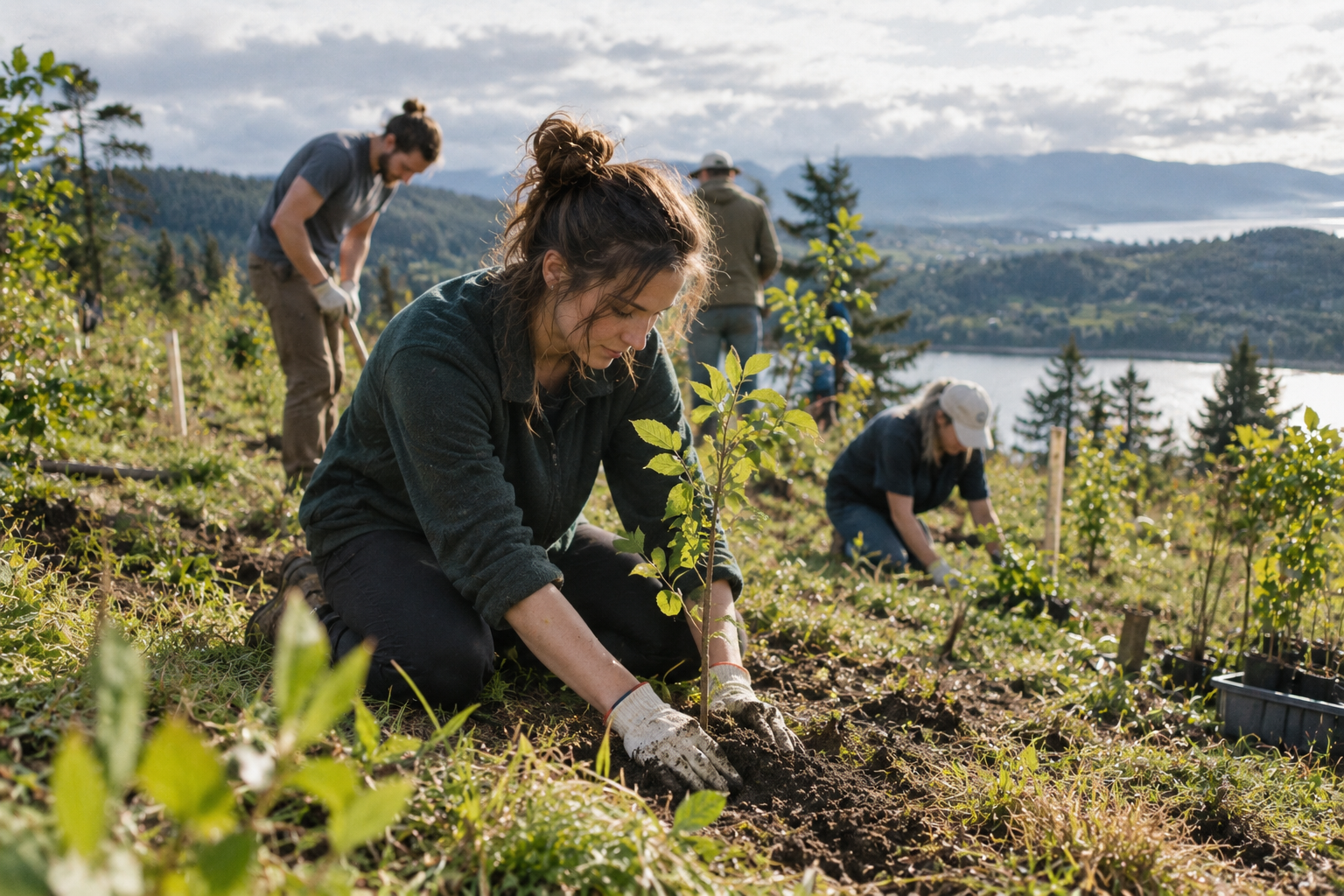
For decades, environmental protection was largely built around one central idea: prevent further damage. Forests had to be protected from destruction, wetlands had to be preserved and rivers had to be kept from becoming more polluted. Those goals remain essential, but the scale of environmental change is creating a second challenge.
In many places, protecting what remains is no longer enough.
Forests have been fragmented, rivers altered, wetlands drained, soils degraded and natural habitats replaced by infrastructure or agriculture. Restoring these systems is increasingly becoming an important part of environmental policy because healthy ecosystems perform functions that modern societies depend on, from storing carbon and filtering water to protecting communities from floods and supporting food production.
The idea of restoration therefore represents a significant shift. Instead of asking only how to stop nature from being damaged, governments, scientists and communities are increasingly asking how damaged ecosystems can recover.
Restoration Means More Than Planting Trees
Tree planting has become one of the most visible symbols of environmental restoration, but healthy ecosystems are much more complicated than the number of trees planted.
A forest is a living network involving plants, animals, fungi, microorganisms, soil, water and climate. Planting trees in the wrong location or using a narrow selection of species may create something that looks green without recreating the ecological functions of a natural forest.
Effective restoration therefore begins with understanding what an ecosystem needs to function.
Sometimes that means allowing natural regeneration rather than planting. In other cases, it may involve removing invasive species, restoring native vegetation, reconnecting habitats or changing the way land and water are managed.
The United Nations Decade on Ecosystem Restoration describes restoration as a process of assisting the recovery of ecosystems that have been degraded or destroyed while conserving those that are still intact.
The emphasis on recovery is important. Restoration is not simply landscaping on a larger scale. It is about rebuilding ecological functions.
Healthy Ecosystems Provide Essential Services
Natural ecosystems perform work that would otherwise be extremely expensive to reproduce through artificial infrastructure.
Wetlands can absorb excess water and reduce flood risks. Forests can protect soils, regulate water flows and store carbon. Healthy soils support agriculture. Rivers provide freshwater and habitats for aquatic species. Coastal ecosystems can reduce the force of storms and waves.
These functions are often taken for granted precisely because they happen without human intervention.
When ecosystems are degraded, however, societies may have to replace some of those functions with engineered solutions. Water treatment becomes more complicated when natural filtration systems disappear. Flood protection becomes more expensive when wetlands are destroyed. Agricultural productivity can decline when soils lose organic matter and biodiversity.
Restoration can therefore be understood not only as an environmental investment but also as a form of infrastructure investment.
Biodiversity Is Part of the Recovery
Ecosystem restoration is closely connected to the global biodiversity crisis.
The disappearance of a species is only the most visible sign of ecological decline. Even before species become extinct, populations can shrink, habitats can become fragmented and ecological relationships can weaken.
A forest with fewer pollinators, predators or decomposers may still appear healthy from a distance while functioning very differently from an intact ecosystem.
Restoration aims to rebuild those relationships.
The Convention on Biological Diversity’s Kunming-Montreal Global Biodiversity Framework includes a target to ensure that at least 30 percent of degraded terrestrial, inland water, coastal and marine ecosystems are under effective restoration by 2030.
The target illustrates the scale of the ambition. Restoration is no longer being treated as a collection of isolated conservation projects. It is becoming part of a global strategy for reversing ecological decline.
Rivers Need Space to Function
Some of the most ambitious restoration efforts are taking place in freshwater ecosystems.
Rivers have often been straightened, dammed, channelled or disconnected from their floodplains to support agriculture, transport and urban development. These interventions can provide immediate benefits, but they can also disrupt natural flows and habitats.
River restoration can involve reconnecting floodplains, removing obsolete barriers, restoring wetlands and allowing waterways to follow more natural paths.
The objective is not necessarily to return every river to its historical condition. In heavily developed regions, that may be impossible. Instead, restoration often focuses on recovering ecological functions while maintaining the infrastructure and communities that depend on the river.
This balance is becoming increasingly important as climate change makes water systems more volatile.
A river that can spread into a functioning floodplain may be better able to absorb extreme rainfall than one confined entirely within concrete channels.
Wetlands Are Small Areas With Outsized Value
Wetlands occupy a relatively small proportion of the world’s land surface, but their ecological importance is enormous.
Marshes, peatlands, mangroves and other wet environments provide habitats for a wide range of species while storing water and carbon. They can also filter pollutants and reduce the impact of floods.
Yet wetlands have historically been drained or converted because they were often regarded as unproductive land.
That perception is changing.
The Ramsar Convention recognises wetlands as ecosystems that support biodiversity, water regulation, food security and climate resilience. Its Global Wetland Outlook has warned that natural wetlands continue to decline despite their importance to human societies and ecosystems.
Restoring wetlands can therefore deliver several environmental benefits at once. Protecting them can be even more effective because restoration is usually harder and more expensive than preventing degradation in the first place.
Forest Restoration Has to Respect Local Ecosystems
Forests are another major focus of restoration efforts, but large-scale tree planting can create misleading impressions of progress.
A plantation of a single fast-growing species is not equivalent to a diverse native forest. It may provide timber or absorb carbon, but it can support fewer species, alter water use and provide different ecological benefits.
Natural regeneration is often an important alternative.
When damaged land is given the opportunity to recover, native vegetation can return through existing seed banks, nearby forests and natural ecological processes. In suitable conditions, this can create ecosystems that are better adapted to local environments than artificially planted monocultures.
The UN Food and Agriculture Organization has highlighted forest and landscape restoration as a way to improve ecosystem functions, livelihoods and resilience while recognising the importance of local conditions and community participation.
The lesson is simple but important: restoration should be designed around ecosystems, not around attractive statistics.
Soil Is an Ecosystem Too
Environmental restoration often focuses on visible landscapes, while one of the most important systems remains largely hidden underground.
Soil contains complex communities of microorganisms, fungi and invertebrates that influence fertility, water retention and nutrient cycling. Intensive cultivation, erosion, pollution and loss of organic matter can gradually degrade this biological system.
Restoring soil health can involve reducing erosion, increasing organic matter, diversifying crops, maintaining vegetation cover and changing agricultural practices.
This is particularly important because healthy soils connect environmental protection with food production.
Agriculture does not have to be separated from ecosystem restoration. In some landscapes, improved agricultural practices can help rebuild soil functions while maintaining productive farmland.
The future of restoration will therefore increasingly involve working landscapes rather than treating nature as something that exists only inside protected areas.
Local Communities Are Essential to Restoration
Restoration projects are much more likely to succeed when the people living in or near an ecosystem have a meaningful role in the process.
Local communities often possess detailed knowledge about seasonal water flows, traditional land management, native species and changes that have taken place over generations. They also have to live with the consequences of restoration decisions.
This makes participation more than a social courtesy. It can improve the quality and durability of environmental projects.
The UN Decade on Ecosystem Restoration places local and Indigenous knowledge among the important sources of expertise for restoring ecosystems and building long-term stewardship.
A restoration project that looks successful on paper but creates conflicts with local livelihoods may struggle to survive. Long-term ecological recovery depends on long-term human commitment.
Technology Is Making Restoration More Precise
Modern technology is changing how scientists monitor environmental recovery.
Satellite imagery can track changes in vegetation and land cover across enormous areas. Drones can provide detailed information about individual restoration sites. Environmental sensors can measure water quality, soil conditions and temperature. Genetic tools can help researchers understand populations and identify ecological relationships that are difficult to observe directly.
Artificial intelligence and machine learning can also help analyse large environmental datasets, allowing researchers to identify patterns and monitor changes more efficiently.
But technology remains a tool rather than a substitute for ecological understanding.
A satellite can show that vegetation has increased, but it may not reveal whether biodiversity has recovered. A sensor can measure water quality, but it cannot by itself determine whether a river has regained its ecological function.
Successful restoration still depends on understanding the system being restored.
Climate Change Makes Restoration More Urgent
Climate change creates an additional reason to restore ecosystems.
Healthy ecosystems can make communities more resilient to environmental shocks. Forests can protect watersheds, wetlands can absorb floodwater, mangroves can reduce coastal exposure and healthy soils can retain more water during dry periods.
At the same time, climate change makes restoration more difficult.
Temperature patterns are changing, rainfall is becoming less predictable in many regions and species are moving into new areas. An ecosystem restored according to historical conditions may face a very different climate in the future.
This means restoration increasingly has to be forward-looking.
Scientists and land managers may need to consider whether particular species can survive future conditions, how habitats can remain connected as species move and which ecological functions will be most important under a changing climate.
Restoration is no longer simply about returning to the past. It is about creating ecosystems capable of functioning in the future.
The Economics of Natural Recovery
The economic argument for restoration is becoming harder to ignore.
The costs of environmental degradation are often hidden until ecosystems fail. Flood damage increases when wetlands disappear. Agricultural productivity suffers when soils deteriorate. Water treatment becomes more expensive when watersheds are polluted. Coastal communities become more vulnerable when natural barriers are removed.
Restoration can reduce some of these long-term costs.
The United Nations Environment Programme has described ecosystem restoration as an opportunity to deliver benefits for climate, biodiversity and human well-being while supporting economic activity and livelihoods.
This does not mean every restoration project will generate immediate financial returns. Ecological recovery can take years or decades. But the alternative — allowing environmental systems to continue degrading — can create costs that are much harder to reverse.
Restoration Is Becoming a New Environmental Mindset
The environmental movement is gradually moving beyond the idea that protection and development must always exist on opposite sides.
The more ambitious approach is to redesign human activity so that ecosystems can recover while societies continue to function.
That may mean restoring a river instead of continually reinforcing its concrete channel. It may mean allowing forests to regenerate naturally instead of relying entirely on plantations. It may mean rebuilding wetlands, improving agricultural soils or reconnecting fragmented habitats.
None of these solutions is simple. Restoration takes time, funding, scientific knowledge and long-term management. Some ecosystems may never return to their original state.
But perfection is not the objective.
The goal is to recover enough ecological function to make landscapes healthier, more diverse and more resilient.
Nature Recovery Will Shape the Next Phase of Environmental Policy
The coming decades are likely to bring a change in how environmental success is measured.
For a long time, progress was often expressed through the amount of land protected, the number of trees planted or the reduction of a particular pollutant. Those indicators remain useful, but they do not tell the whole story.
The deeper question is whether ecosystems are actually functioning again.
Are rivers supporting biodiversity? Are wetlands storing water? Are soils retaining nutrients? Are forests becoming more diverse? Can wildlife move between habitats? Can natural systems help communities withstand environmental shocks?
These questions shift attention from activity to outcomes.
Restoration is ultimately about rebuilding relationships that have been weakened between soil, water, plants, animals and people. It recognises that modern societies depend on functioning ecosystems even when those dependencies are easy to overlook.
The world cannot restore every damaged landscape to its original condition. It can, however, choose to stop treating ecological decline as irreversible.
That may be the most important change of all. Environmental protection has traditionally focused on what humanity must avoid destroying. The next stage is increasingly about what humanity can help nature rebuild.